
When cellular meets space: the next phase of mobile connectivity
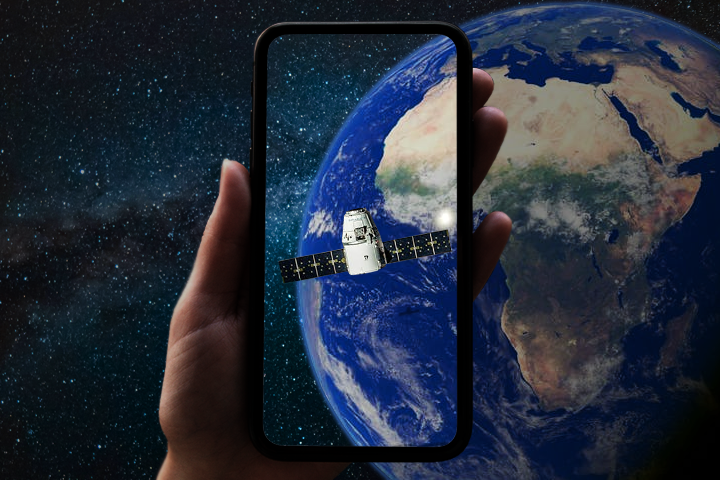
Direct-to-device satellite connectivity is transforming satellite communications from a costly, niche solution into a mass-market capability. Leonardo Hodgson considers how telcos can monetise and scale hybrid terrestrial–satellite connectivity.
For most of the history of wireless communications, satellite services were restricted, expensive, and typically limited to bulky handsets designed for expeditions or remote access. Yet in a remarkably short period of time, this perception of satellite communications has changed.
Direct-to-device (D2D) satellite connectivity, where everyday smartphones connect directly to satellites without external hardware, is reshaping the industry. What was once a niche technology is now emerging as a key telecoms proposition, driven by new standards, ambitious satellite constellations, smarter chipsets, and strategic partnerships between terrestrial and non-terrestrial providers.
The result is a new communications paradigm that promises to extend mobile coverage to every corner of the planet without waiting for additional tower installations.
D2D satellite connectivity
Even in developed markets, significant gaps in mobile coverage still exist; mountain regions, deserts, forests, remote islands, offshore locations, and sparsely populated rural areas remain difficult or uneconomical to cover with terrestrial infrastructure.
At the same time, customer expectations for constant service have grown dramatically. Global travel, adventure tourism, remote working, and the increasing dependence on digital services have made “no signal” feel outdated and unacceptable.
In parallel, satellite technology has been quietly undergoing a revolution.
Low Earth Orbit (LEO) constellations now orbit much closer to Earth than traditional geostationary satellites, reducing latency and increasing signal strength. Combined with more capable ground devices, smaller antennas, and improved cost structures, this is allowing satellite broadband services to move into the mainstream and achieve wider global adoption.
Smartphone manufacturers are also accelerating this shift by integrating chipsets designed to communicate directly with satellites. At the same time, the mobile industry is standardising how terrestrial and non-terrestrial networks interoperate through 3GPP’s Non-Terrestrial Network (NTN) specifications.
Together, these developments are converging to enable something that was not feasible a decade ago: mass-market satellite services on standard mobile devices.
What today’s services look like
Although the technology is still in its early stages, D2D services are already available in several countries.
The most widely adopted examples today focus on emergency messaging and location-based safety features. Apple’s Emergency SOS via satellite, powered by Globalstar, demonstrated how seamless such services can be for users who find themselves outside cellular coverage. Apple has since reinforced its commitment by investing $1.5 billion in Globalstar to expand satellite capabilities and strengthen iPhone connectivity in this space.
Another recent example is T-Satellite, a collaboration between T-Mobile and Starlink. The service enables standard smartphones to send texts, share locations, and use selected apps such as WhatsApp and Maps in cellular dead zones for a current monthly fee of $10.
Beyond messaging, several operators have conducted successful trials of voice calls and even video sessions using unmodified smartphones. While bandwidth remains limited today, these demonstrations clearly show the direction of travel; services that begin with safety and messaging are expected to evolve into everyday communication use cases.
The current limitations are largely practical; satellite services typically require a clear view of the sky, data rates are modest, and availability varies by region due to regulatory constraints. However, as satellite constellations expand and standards mature, these constraints are expected to reduce significantly.
What still needs to improve
While early services are promising, in order to deliver ubiquitous D2D connectivity, satellite networks must grow dense enough to provide consistent, uninterrupted coverage. Standards need to continue evolving to support higher-bandwidth services, and regulatory harmonisation will be required to allow global offerings to operate seamlessly across borders.
Though technical challenges remain, such as managing fast-moving satellites, minimising power consumption on smartphones, and ensuring reliable handover between terrestrial and satellite networks, these are increasingly engineering challenges rather than fundamental barriers. The pace of innovation suggests that satellite connectivity will soon feel as seamless as roaming between terrestrial networks does today.
D2D and the telcos
For mobile operators, D2D satellite connectivity represents both a major opportunity and a strategic inflection point. On one hand, it allows operators to extend coverage far beyond the limits of terrestrial infrastructure whilst enabling new service propositions, including premium connectivity tiers, satellite fallback for global roaming, and tailored solutions for industries such as logistics, mining, utilities, maritime and agriculture.
On the other hand, satellite providers themselves may emerge as powerful competitors. As the technology evolves and users increasingly rely on satellites for messaging, voice and data, the relationship between mobile operators and satellite networks could shift from partnership to competition. The industry is still working to define sustainable partnership models, roaming agreements, and pricing mechanisms that balance reach, cost and control.
Delivering these hybrid services at scale introduces new operational and commercial complexity, something that Cerillion is well positioned to support. Our BSS/OSS suite enables the creation of satellite and hybrid service offerings, supports new charging and revenue-sharing models, and orchestrates service provisioning across terrestrial and non-terrestrial networks. These capabilities help operators manage, monetise and operate hybrid connectivity services in a consistent and scalable way.
Cerillion’s involvement in this space extends beyond platform capabilities; the company was a key participant in the TM Forum Moonshot Catalyst Project UNITe: Unified Network Integration for Terrestrial and Non-terrestrial Communications - Phase II, working alongside CGI, Mavenir and Tata Consultancy Services, and with project champions including TELUS, Deutsche Telekom, Terrestar Solutions, Airbus and Elisa. The initiative focused on addressing the challenge of seamless global connectivity across satellite and cellular networks, providing practical insight into the real-world integration challenges that operators face.
Conclusion
Direct-to-device satellite represents one of the most significant shifts in the history of mobile communications. Over the next decade, it is likely to evolve from an emergency-only capability into an integrated part of everyday mobile services. Operators will increasingly differentiate themselves not just by their terrestrial coverage, but by the strength and reach of their satellite partnerships.
This has the potential to close the global connectivity gap, strengthen communication resilience in times of crisis, and unlock new opportunities for digital innovation worldwide.
For operators, the message is clear: D2D starts as a safety feature, but its real value will come from how effectively it is integrated into core commercial, roaming and operational models.
Those that benefit most from D2D satellite connectivity will be those that adopt hybrid terrestrial–satellite models early and integrate them effectively into their commercial and operational frameworks.
