
MWC26 review: AI everywhere, but satellites steal the show
MWC 2026 was full of AI, robotics and bold ideas, but not all of it lived up to the hype. Cerillion’s Product Director, Brian Coombs, cuts through the noise to identify what really mattered – from the growing importance of satellite connectivity to the “invisible” systems that turn innovation into revenue.
This year was the 20th anniversary of MWC in Barcelona and, as usual, I was there to meet with customers and prospects and to walk the many, many floors to find out what’s new, exciting, or maybe just weird in this industry we’re part of.
AI (Agents) everywhere
Let’s start with the obvious: AI. Yes, it was absolutely ubiquitous, to the point that I set myself a challenge to find a stand that didn’t mention AI and only achieved it on the third day!
It was hard to identify clear themes – there was the usual mix of hype and promises to solve all your problems, a lot of very generic demos, and a lot of people had rubbed out the word “AI” and replaced it with “Agent.”
One thing I will say is that I was expecting Model Context Protocol (MCP) to have greater visibility this year, as this seems like an obvious way to expose data from your product to the wider AI ecosystem. Look out for my next blog post, where I’ll be writing about MCP and how we’ve got around some of its limitations to expose the full capability of the Cerillion system, no matter how you want to use it.
Robotics finds its feet
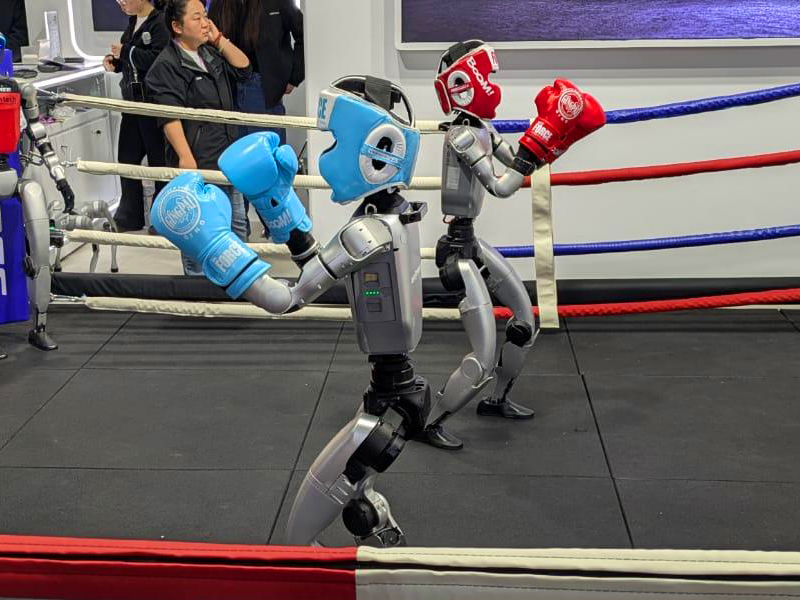
Complementary to AI was robotics, with many more exhibits than previously. If you wanted to shake hands with a soft-touch robot hand, see robots boxing, dancing, doing backflips, serving drinks, or just moving blocks of plastic around for no discernible reason, then MWC was the place to be!
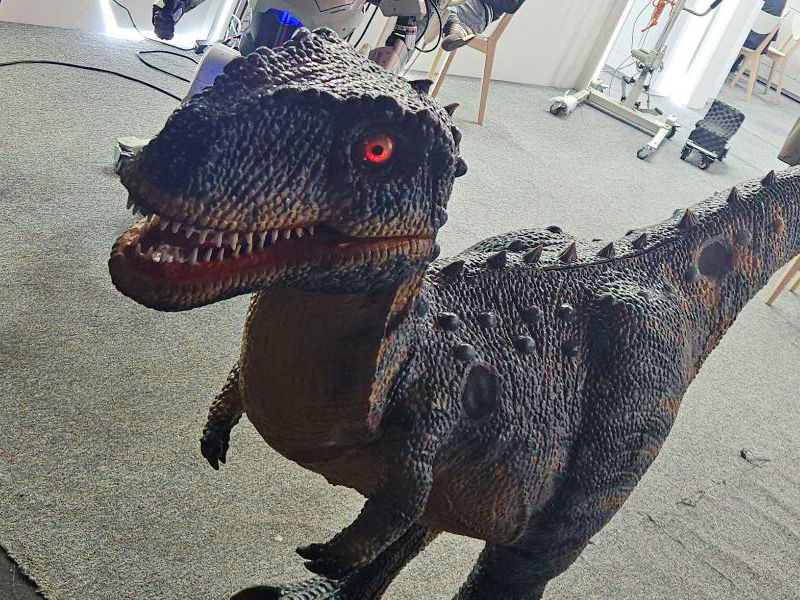
I can’t think of many good uses for the four-foot-high autonomous T-Rex robot, but it looked very cool wandering around and, if you could justify it, you could have bought one at the show!
The thing that stood out for me compared with previous years is just how much more stable the robots have become. Unitree in particular has spent a lot of time ensuring they can be pushed (or punched!) around and remain steady on their feet. I think we’re getting close to a breakthrough on robotics – similar to what we’ve seen in AI over the last few years – where they will suddenly become very useful for many different tasks.
Satellites take centre stage
For me, though, the breakout tech of the show was satellites. Starlink had a good-sized stand and continues to expand its footprint and partnership agreements, including announcements with Deutsche Telekom and others at the show.
Vodafone announced a deal with Amazon Leo, while Orange has signed an agreement with AST, and there were many more manufacturers of satellite kit for both space and land-based infrastructure.
This is probably going to be one of the more disruptive technologies for the telecoms industry over the next few years, as satellite becomes a viable third choice at global scale.
Experimentation returns to devices
I’ve bemoaned the lack of innovation in the mobile handset space for a few years, but this year the show featured some companies actually trying something new – whether they end up taking over the world or on a questionable handset of the month list, only time will tell.
The one getting the most headlines was the Honor Robot Phone, with a camera that flips out on a gimbal, allowing it to track people as they move. This extra stability is designed to get rid of that queasy feeling you get watching most mobile phone videos. The lady dancing around on their stand, jumping and falling to the floor for hours on end to show the tracking, definitely deserves an award for her stamina! The robot part comes from the fact that it will nod and squeak in answer to the user – I suspect that will get annoying very quickly, but at least they’re trying something new.
Other innovations in the phone space included Samsung with its privacy screen – as this is now built into the display, it can be triggered only for certain apps, which is genuinely useful. There were also a lot of gaming rigs to fit around your phone to give you comfortable controllers, evidence of the increasing power of mobiles to run games that used to require dedicated hardware.
Probably the only other thing that caught my eye in this area was that rollable screens look like they’ve passed most of the technical hurdles. Several companies had demonstrations - albeit behind “do not touch” barriers - that showed screens with contrast and resolution to match a laptop screen happily rolling and unrolling themselves. If it follows the “folding screens” trend, expect to be able to buy one next year, and there to be many more options the year after.
6G begins to take shape
It would be remiss of me not to mention 6G here. Momentum is building on the technical definition side, though in contrast to the early days of 5G, I’m not seeing anyone yet trying to claim it will open up new revenue streams and opportunities for operators.
This will be one that grows in importance over the next few years prior to the expected start of the rollout in 2030. For now, it remains a long-term story rather than an immediate opportunity.
Quantum computing moves closer
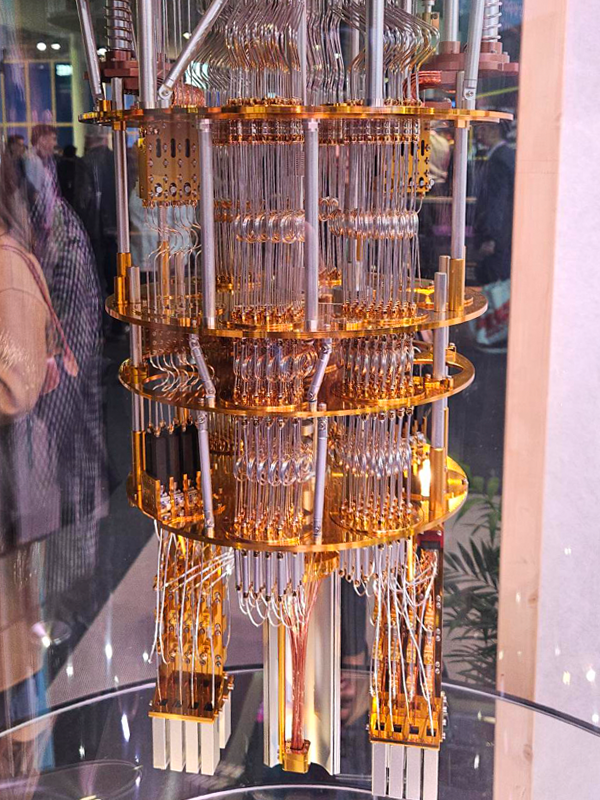
Finally, the most futuristic tech on show was quantum computing. Fujitsu showed off its scaled model of a quantum computer that looks incredible, but what you are really looking at is just a massive cooling tower, where the actual chip sits within the small gold component at the base. They talked about various use cases and their roadmap to production in 2035.
On the flip side, several companies were talking about post-quantum encryption – how do you keep data secure in a world where brute-force attacks can run massively in parallel?
It’s still early days for quantum computing, but it will be a fascinating back-and-forth as this technology moves out of the labs and into the real world.
Cerillion – real systems on display
On the Cerillion stand, we had a constant flow of demos and discussions with existing customers and some exciting new prospects. Several people mentioned we were the only stand they’d seen displaying real software, rather than just videos and slideware.
It’s definitely dangerous – the combination of AI and unreliable MWC Wi-Fi can lead to some nervous moments – but well worth it to keep things grounded in reality at a show that can often feel like everything is just that little bit out of reach.
MWC 2026 reinforced a familiar pattern: plenty of noise, but a few signals that really matter. AI is everywhere but still searching for substance, robotics is improving fast but not yet essential, and satellites may finally reshape the connectivity landscape.
What’s easy to overlook, however, is that none of this works without the underlying systems to support it. The “invisible” BSS and OSS layer remains critical – turning innovation into something that can be delivered, managed and ultimately monetised.
For all the hype, the biggest shifts are still the ones that quietly move from possibility to practicality.
See you all again next year!
If you didn't get the chance to see us this year, get in touch now to find out more about our BSS/OSS suite, and to book your own personalised demo.
