
The need for speed? Why telcos should focus on more service, not faster connections

While operators race to deliver ever-faster connections to people who are already well-served, billions of potential customers remain without any reliable signal at all. Is ubiquitous coverage, not speed, where the opportunity lies?
Telecoms services have long been marketed around coverage, speed and reliability, but in practice the industry has increasingly focused on headline speed. In a market facing commoditisation and pricing pressure, that focus is no longer enough.
The era of exponential data usage is coming to an end, driven by factors such as improving data compression and maturing streaming usage.
The implication is simple: faster networks are not the primary driver of growth.
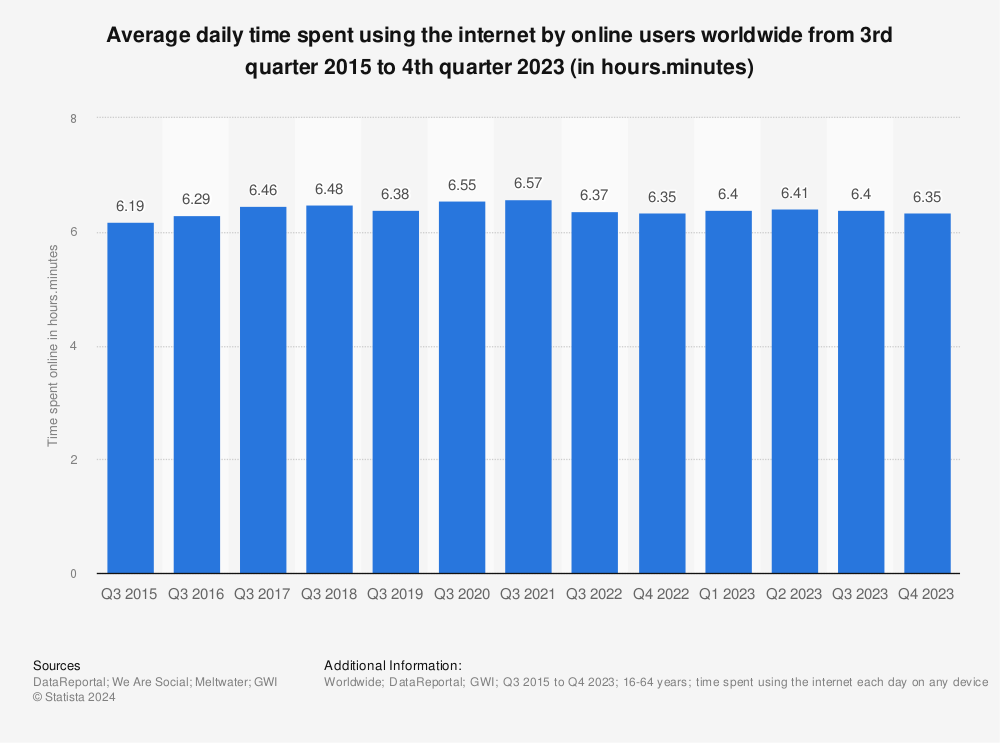
In reality, mobile networks today – even with patchy 5G coverage – satisfy most workloads, and higher speeds may not translate into greater usage.
Ericsson’s Mobility Report says global mobile traffic grew just 21% year-on-year in the third quarter, down from 40% three years ago, and from 95% six years ago. Ericsson forecasts a continued steady decline to 16% in 2030. In many countries, growth in mobile data traffic has already stalled, and may trend towards low or zero growth.
We could even see a fall in traffic, as network capacity continues to increase.
If faster networks are no longer driving growth, the question becomes: where is the next opportunity?
Beneath this need for speed lies an uncomfortable truth: millions across the world still cannot access a reliable connection of any kind. For telcos, the obsession with speed is a distraction from a far more consequential challenge, and a more significant commercial opportunity. The future of the industry belongs not to those who deliver the fastest connections, but to those who deliver a connection everywhere.
This shift is taking place as the mobile market enters a commodity phase, reinforcing the need to find new sources of growth beyond speed.
Despite decades of investment across both mobile and fixed networks, connectivity remains profoundly unequal. In many areas, there is significant overbuild in fibre (FTTx) networks, leaving much of the capacity unused by customers. The industry's attention and capital have poured into densely populated urban areas, where speed upgrades translate easily into premium pricing and high subscriber volumes. Meanwhile, underserved areas are regarded as commercially unviable.
Investment should shift from adding marginal capacity in already well-served areas to extending meaningful coverage where connectivity remains limited.
The biggest pain points for customers often show up during peak times: commuting, large venues, dense housing, and city centres. This highlights that coverage quality, not just headline speed, is what customers actually experience. Coverage alone has limited value if users still experience congestion or weak indoor signal, especially if they are paying for expensive plans not delivering in any meaningful way.
There is also a straightforward commercial logic to reconsidering the speed-first strategy. In mature markets, the marginal value of additional speed is declining sharply.
By contrast, the potential value of connecting the unconnected is significantly higher. The total addressable market for ubiquitous connectivity dwarfs the market for marginal speed improvements. Telcos that recognise this will find that coverage expansion is one of the most compelling growth strategies available to them.
Ubiquitous connectivity is often framed as a consumer story, but its greatest economic impact is likely to be in enterprise and public sector transformation. When reliable connectivity is available everywhere, it becomes feasible to digitise operations that were previously constrained by location or network quality; utilities can deploy smart infrastructure at scale, logistics networks can track assets end-to-end, and manufacturing sites can run private networks.
This shift also changes what telcos sell; the industry moves from selling bandwidth towards selling outcomes, be it guaranteed performance, secure identity, prioritised traffic, or resilient connectivity for mission-critical environments.
Delivering ubiquitous connectivity requires a layered approach, combining multiple technologies, each addressing different coverage, capacity, and economic constraints:
- Massive multiple-in, multiple-out (MIMO) can increase capacity of a given site significantly to combine many transmissions into a single beam.
- Shared infrastructure models, where operators pool tower and backhaul assets in rural areas, are gaining traction as a way to spread the economics of coverage expansion.
- Low Earth orbit satellite networks are beginning to demonstrate that high-quality connectivity can now be delivered to locations previously unreachable by any terrestrial infrastructure, and provide resilience in certain scenarios (e.g. vehicles and remote coverage), though it is not a replacement for terrestrial networks.
- More private networks (e.g. for universities, hospitals, industry etc.) could drive up total traffic volumes locally, while freeing up traffic from public networks.
In practice, delivering ubiquitous service is less about new technology, and more about deploying smarter and operating more efficiently.
The speed race has its place, but the coverage race will define the industry's legacy. Ubiquitous service is not a single milestone, but a commitment to continuous extension and upgrade.
Crucially, the systems that sell, provision, bill, and assure services are just as important in enabling cost-effective coverage expansion. BSS/OSS modernisation enables simpler commercial models; complex tariffs, confusing bundles, and hidden fees can reduce adoption and undermine affordability even when networks exist.
For operators, the strategic shift is clear: prioritise coverage over peak speed, focus on utilisation over expansion, and design services around outcomes rather than raw speed.
Cerillion’s BSS/OSS suite helps telecoms operators streamline operations and expand coverage efficiently and profitably.
